
Penang LRT Contract Award
A pathway to regional and global opportunities for Malaysian firms—and a transformation that must reach every level of society.
Background: Penang Mutiara Line works. Image source: The Star.
The award of the RM3.028 billion Penang Mutiara Line Light Rail Transit System Turnkey Contract to the MRCB–Theta Edge joint venture marks an important milestone—not only for Penang’s public transport ambitions, but also for Malaysia’s infrastructure and railway capabilities.
The contract covers seven major railway-system packages, including electric trains, signalling and train control, platform gates, trackwork, power supply, telecommunications, information technology and automatic fare collection. It demonstrates that Malaysian companies are increasingly capable of undertaking complex transport projects that have traditionally depended heavily on international providers. Read the reported MRT Corp announcement.
More Than a Construction Contract
A major infrastructure project should never be measured only by its contract value, station count or kilometres of railway. Its true value must also be measured by the economic and social activities it creates throughout the ecosystem.
From the engineer designing the system to the small food-stall operator serving workers—and from the technician maintaining the trains to the wage earner travelling daily—the impact spreads across many levels of society. Every ringgit spent has the potential to circulate through salaries, procurement, rentals, food, transport, professional services and local consumption.
Transforming Daily Social Life
For ordinary Penangites, the LRT is not simply a railway project. It has the potential to change how people live, work, study and move.
Reliable public transport can give wage earners more predictable journeys and reduce dependence on private vehicles. Students may gain easier access to education. Senior citizens and persons with disabilities can enjoy greater mobility when stations, trains and connecting services are designed around universal accessibility.
Families may spend less time trapped in traffic and more time together. Businesses may reach a wider labour pool. Workers may pursue employment farther from home without carrying the full cost of purchasing, fuelling and maintaining another vehicle.
A New Economic Corridor Around Every Station
Each LRT station can become a small economic centre. With proper planning, station areas can support food outlets, retail, services, offices, accommodation, education, healthcare and community activities. Existing small traders should be helped to participate in this growth rather than being displaced by it.
- Affordable trading spaces for micro and small businesses;
- Structured opportunities for local suppliers;
- Safe pedestrian, cycling and universal-access routes;
- Feeder buses and first-and-last-mile transport;
- Park-and-ride facilities where appropriate;
- Connections to tourism and heritage areas; and
- Skills training linked to construction, operations and maintenance.
Without good last-mile connectivity, an LRT station risks becoming an isolated structure. With proper integration, it becomes a gateway connecting homes, workplaces, schools, hospitals, markets and tourism attractions.
Traffic Relief Requires Integration
The LRT can reduce pressure on Penang’s roads, but it cannot solve congestion alone. People will leave their cars behind only when public transport is safe, reliable, affordable and convenient from the beginning to the end of their journey.
The system must therefore be supported by feeder buses, covered pedestrian links, cycling routes, suitable parking, integrated ticketing and well-planned passenger drop-off points. Construction must also be managed carefully: diversions, dust, noise and reduced access can affect residents and businesses. Clear communication and practical assistance for affected traders are essential.
The project’s success should be measured not only by whether it is completed, but by whether people actually use it—and whether communities benefit from it.
Building Malaysian Capability for the World
The bidding process involved demanding technical, financial and delivery requirements. Partnerships formed with international organisations should not end when a contract is awarded. They should become platforms for knowledge transfer, Malaysian intellectual property, local training and stronger project-management capability.
Malaysian firms must build proven expertise in railway engineering, systems integration, signalling, telecommunications, cybersecurity, digital ticketing, asset management, preventive maintenance, safety, emergency response, local spare-parts capability and long-term after-sales support.
Penang Today, Johor Next—and Beyond
Penang’s Mutiara Line and Johor’s expanding transport and economic ecosystem show that Malaysia is entering a new phase of regional development.
Penang requires better connectivity to support its people, industrial base, tourism economy and future urban growth. Johor—strengthened by the Johor Bahru–Singapore Rapid Transit System Link and the Johor–Singapore Special Economic Zone—presents another platform for transport-oriented investment, employment and cross-border economic activity.
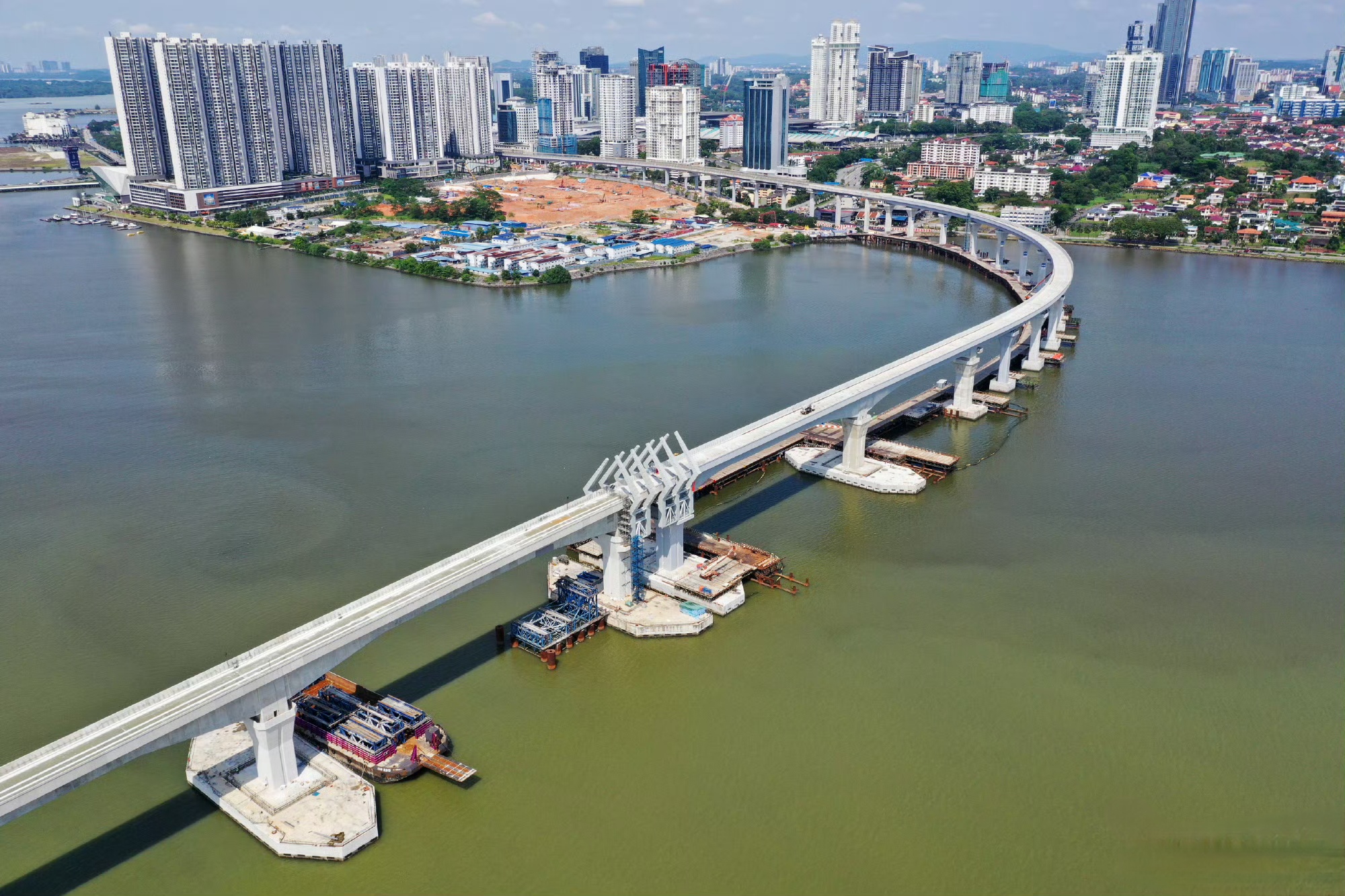
Infrastructure must not be developed as an isolated construction project. It must be planned as an economic and social transformation programme.
If Malaysia connects rail development with local procurement, technical training, small-business participation, affordable mobility and long-term industrial capability, the benefits will extend far beyond the companies receiving the main contracts.
The real success of the Penang LRT will not be seen only in the trains running above the city. It will be seen in the small trader earning more income, the wage earner reaching work on time, the student accessing education more easily, the employer reaching a larger workforce, the tourist exploring Penang conveniently and the Malaysian company confidently competing for its next project overseas.
That success will reinforce the case for Malaysian firms to expand beyond national borders and compete for regional and global opportunities.

Comments